


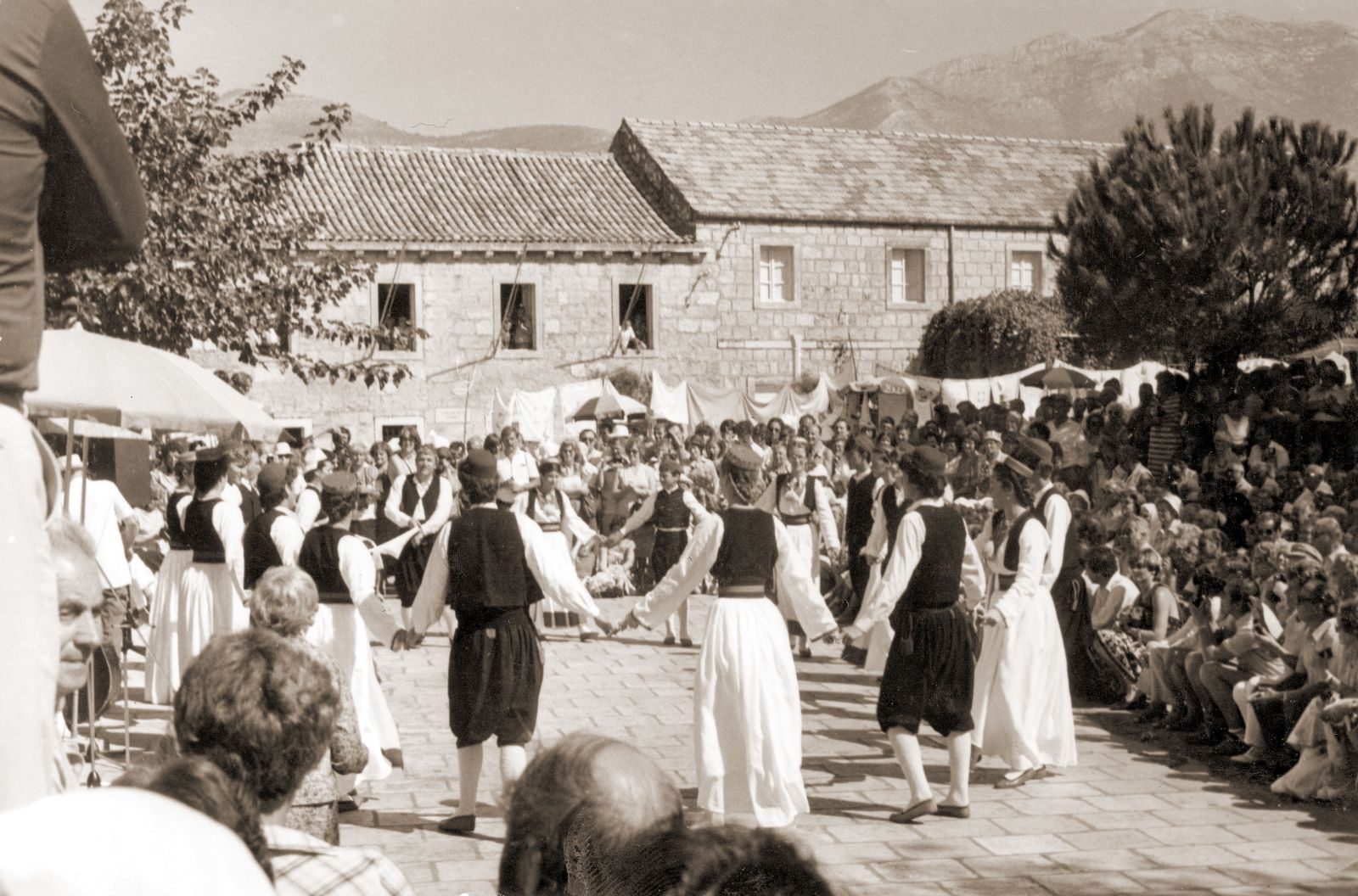
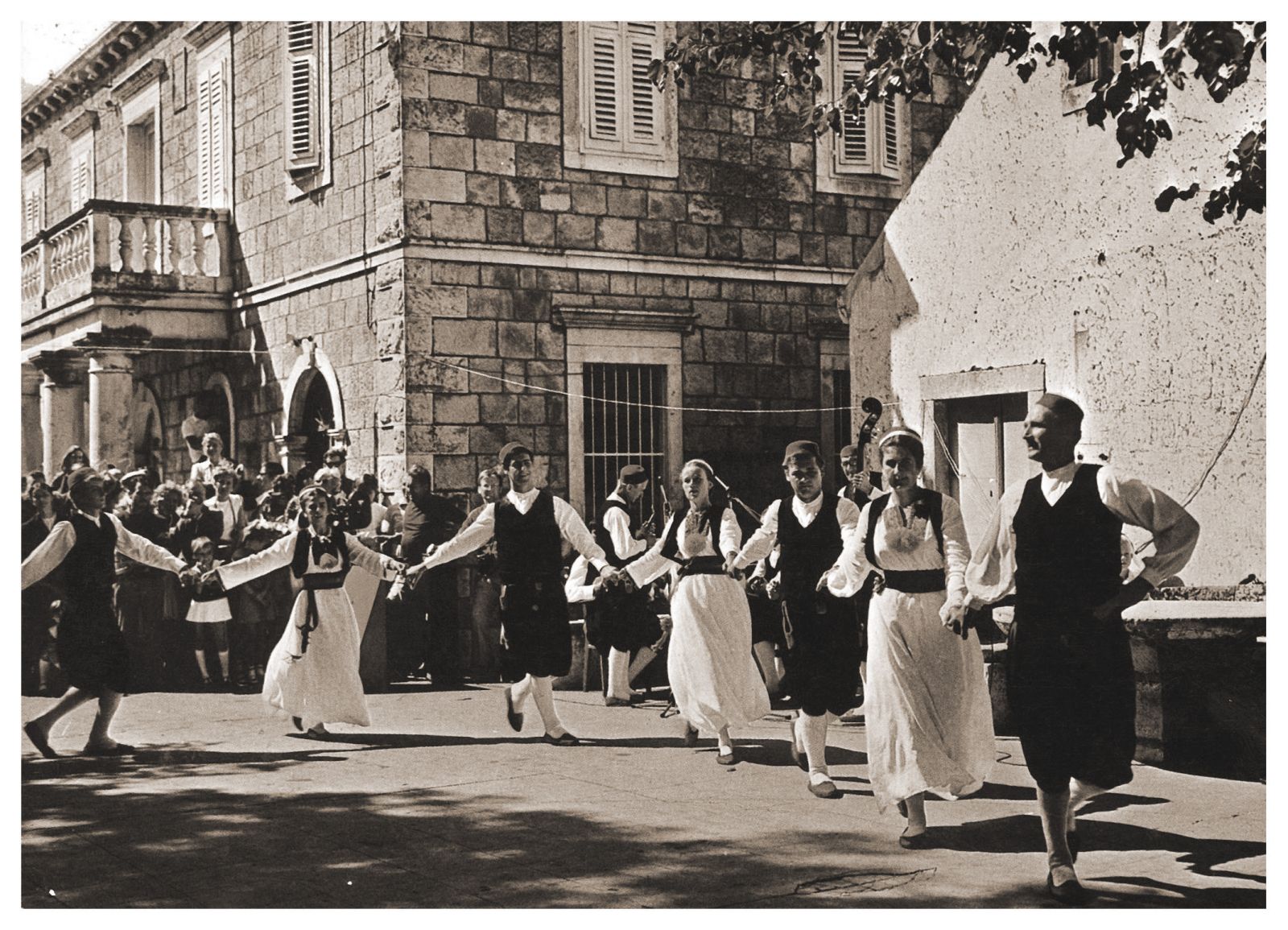
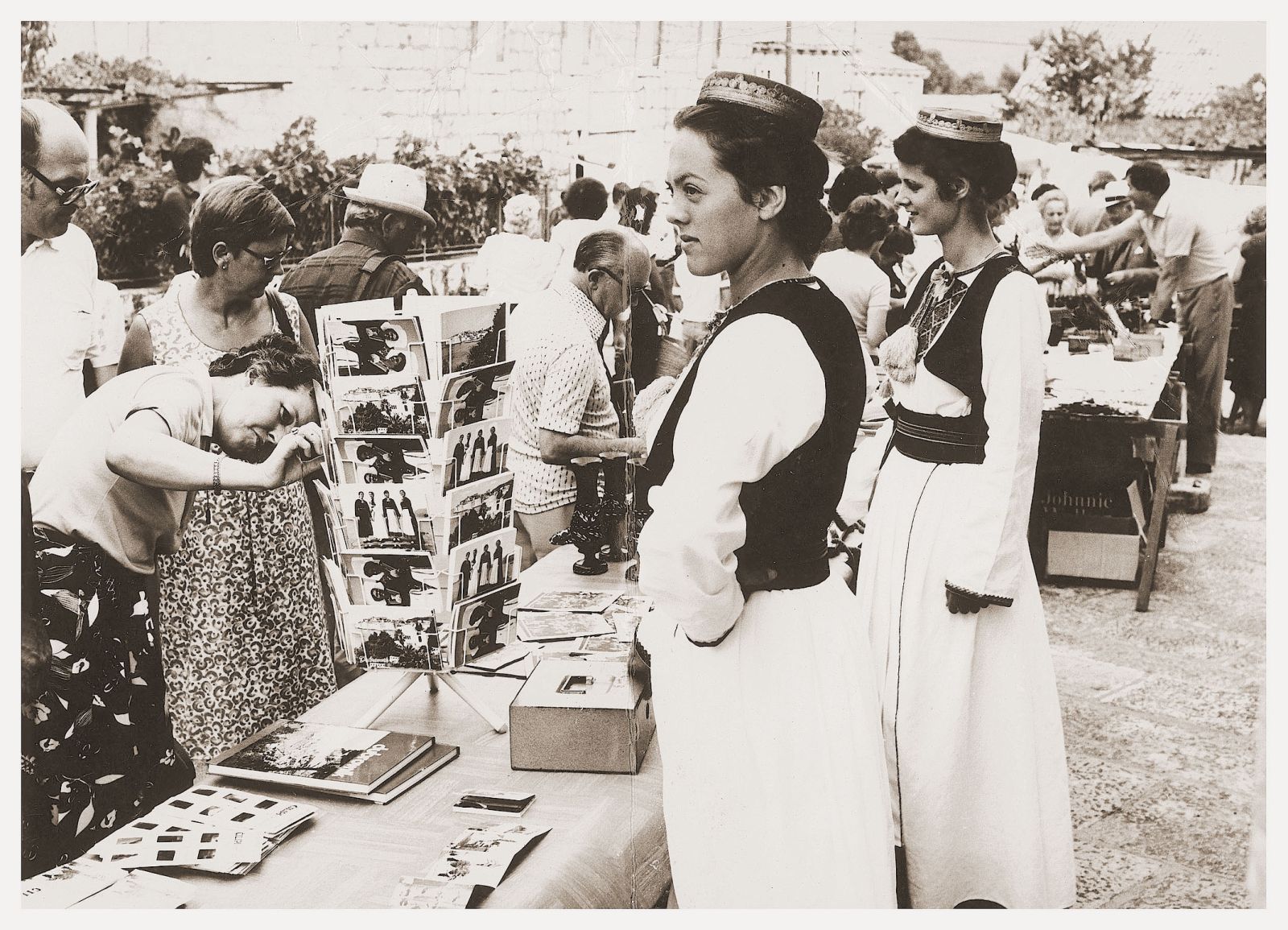
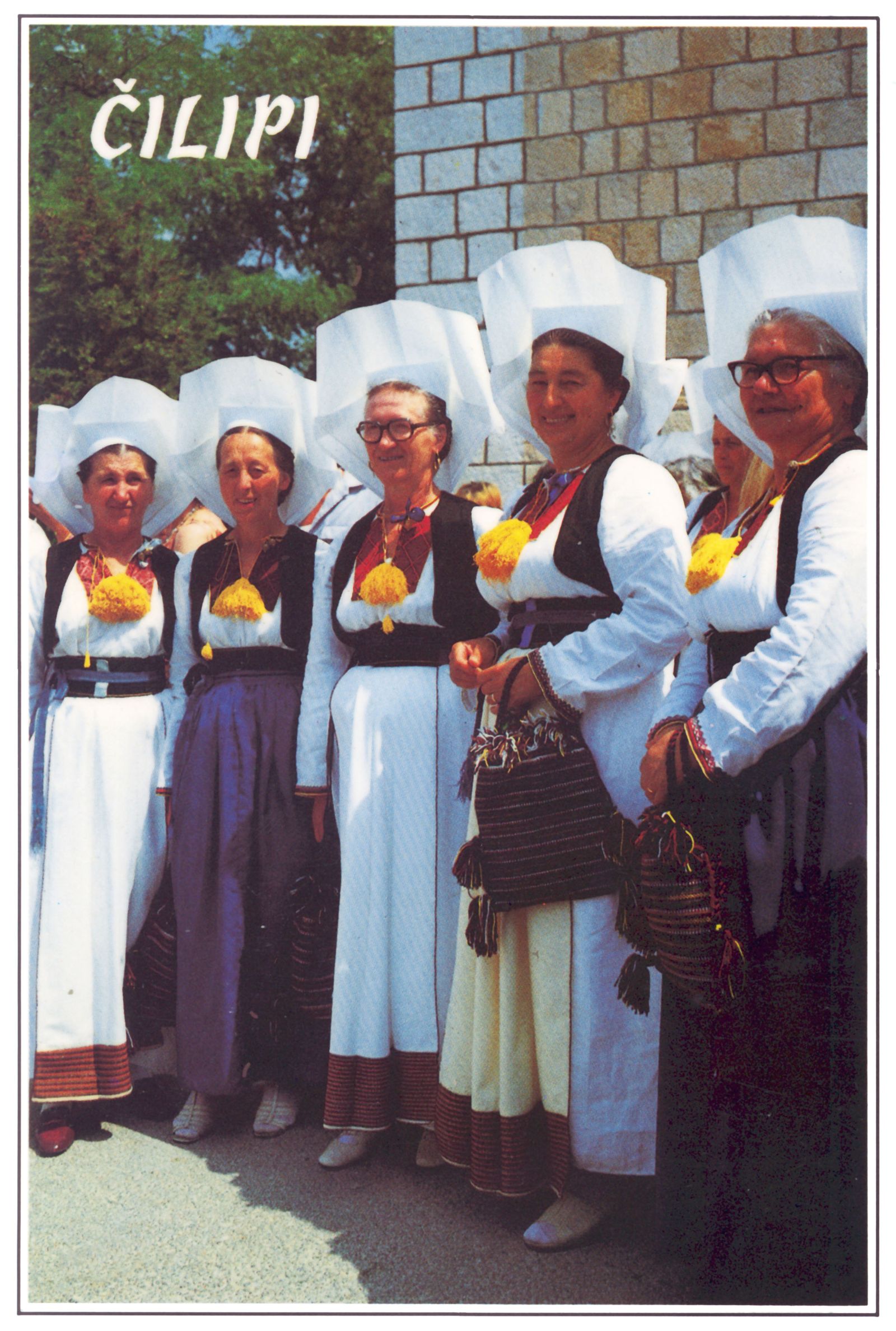
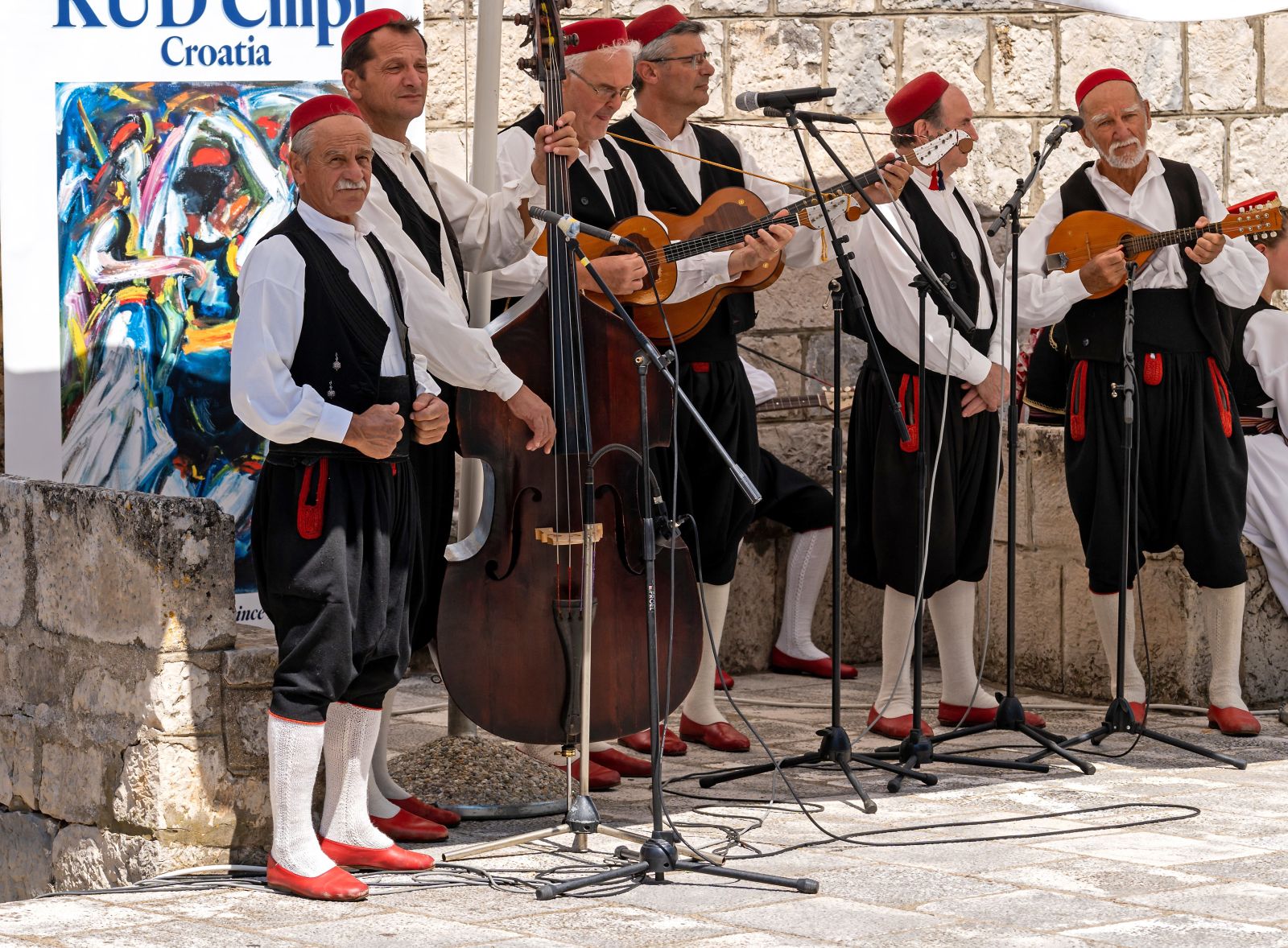
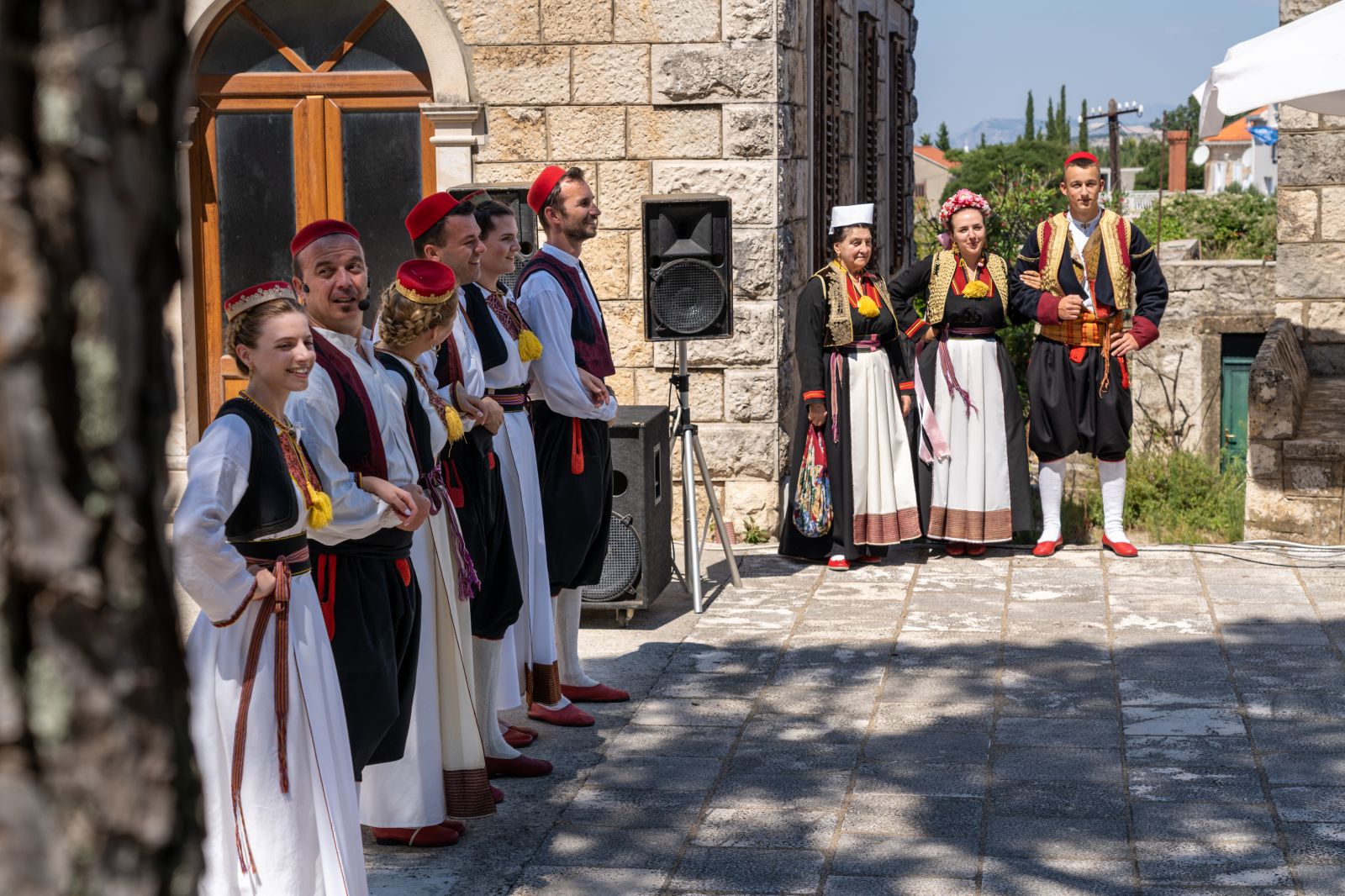
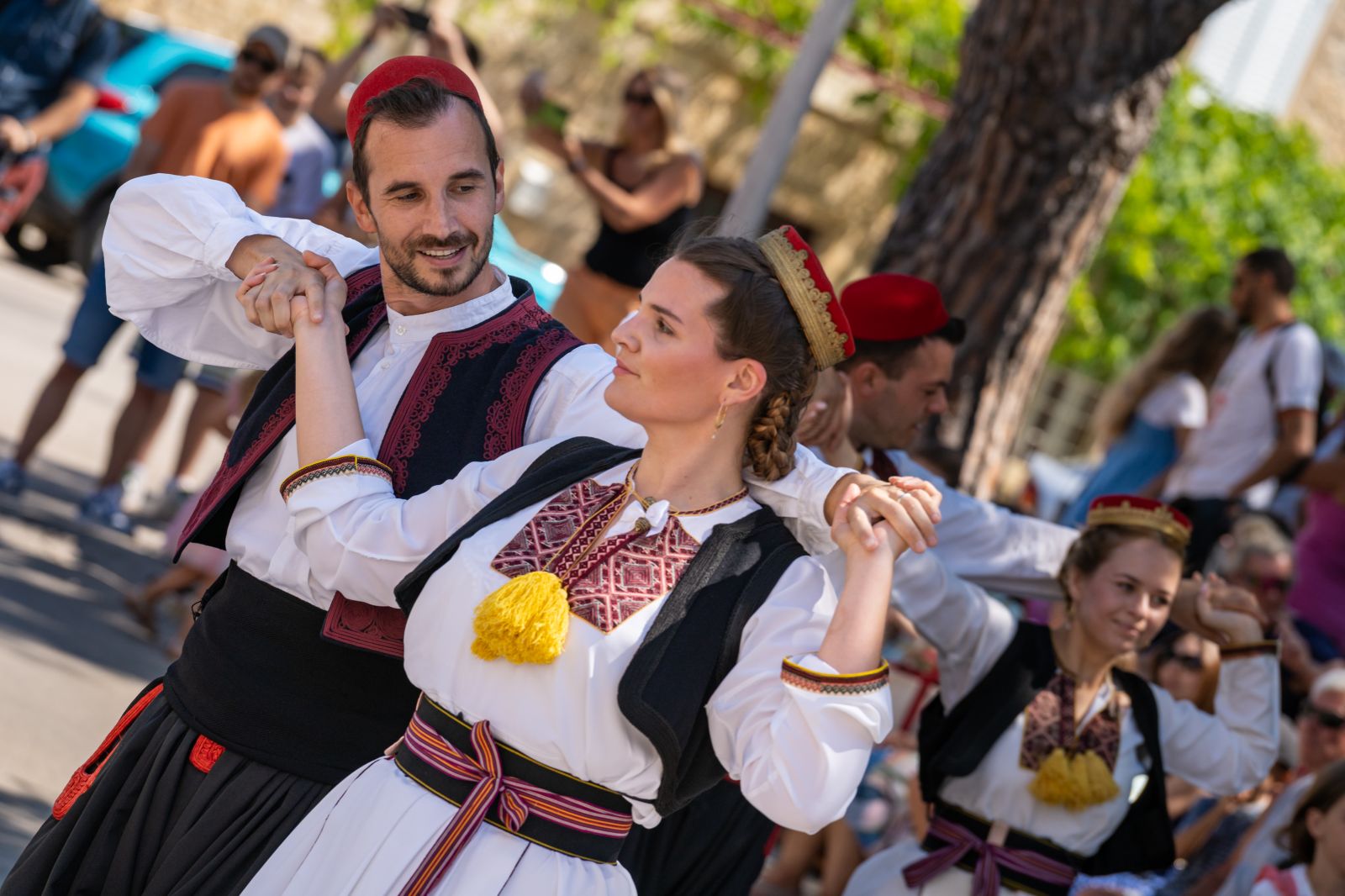
The bell tower of the church of St. Nicholas in Čilipi guards over the most beautiful open-air dance floor in Konavle, where local men and women have been dancing in unique folk costumes for decades. On the square in front of the church, the guardians of tradition proudly bring to life the heritage that their ancestors have passed down to them. This performance started back in the 1960s thanks to the klobučari or krilaši, the traditional hats with headscarves worn by Konavle women. Thanks to these attractive head coverings (part of the Konavle women’s traditional dress), Sunday masses in Čilipi were permanently recorded in the photographs of many tourists who would join them in prayers. That perfect harmony of beauty and the unique appeal of traditional dress was the reason for the beginning of a new chapter in the life of Čilipi when the culture and arts society was founded 70 years ago.
There is no house in Čilipi that, in the long history of this society, has not been a part of this folklore story of Konavle, in one way or another. The central Sunday event in Čilipi is the Holy Mass in the church of St. Nicholas. It was in this space that the idea of presenting Konavle dress and customs to tourists was born.
“That’s how it all started, and today about 60 children in three groups learn to dance, and about 20 to play music. There is also a group of future players of the lijerica [traditional string instrument], so there is no fear for the future of Čilipi folklore,” proudly states Stipica Vezilić, president of the Čilipi Culture and Arts Society, known as “KUD Čilipi”.
The first performance in Čilipi in front of the church of St. Nicholas was held in 1967 on the gravel road, without stands for spectators. With time, a folklore excursion to witness these performances became an essential part of the offer of Dubrovnik tourist agencies. Cooperation with the former Atlas tourist agency opened a completely new page in the life of this Konavle village.
The space precrkve or “before the church”, as the locals call it, surrounded by traditional stone buildings, is a perfect micro-location, almost a textbook on preserving the tradition, culture, and heritage of this region. It seems to have been shaped exactly according to the needs of Čilipi, for the presentation of folklore and the preservation of Konavle heritage. The openness of this place to events that are organized every Sunday and the support of the residents for the society show the beauty of the coexistence of the local population with the needs of tourism. Tourism and the preservation of our tradition revived the interest of local people in traditional dress, and they are careful about how and what they wear.
“In the first years, you could see girls with [modern hairstyles like] bangs or without braids, but after the 1980s, that was no longer the case. The way of respecting the Konavle folk costume has been refined, and the Museums and Galleries of Konavle and the inhabitants of this region themselves had a significant influence,” Marko Matić and Stipica Vezilić, long-time members of the society, tell us.
Many people see the members of this culture and arts society as professionals, but the members only see themselves as lovers of folklore and their village. Although the Society has a collection of traditional clothing, those that the members regularly present are their own personal property. They all take care of their costumes, keep them in their homes and come to mass dressed in them on Sundays. There were years, especially the war years of the 1990s, when the whole village was destroyed and burned in the aggression, including a large part of the traditional costumes, embroideries, and memories. A healthy spitefulness then awoke in everyone, so they danced (balalo se) regardless of whether there were people in the audience or not, and they danced even while enemy shells were still falling in Konavle. The women in the village learned to make parts of the costume, so over the years a good part of the destroyed folklore treasure was restored and each house with its small contribution led to a common victory that all generations enjoy today. From the youngest to the oldest, it is an honor for everyone to be a part of the folklore story.
“Dancing has since olden times always been an extremely important part of life in Konavle; people danced on the gumno (threshing floors), in homes, schools, and in Čilipi, on the terrace in front of the present-day Konavle County Museum,” recalls Marko Matić, a member of the society who danced in the first male ensemble of KUD Čilipi. The dance and music repertoire has undergone some minor changes over the past 70 years, but the concept has remained similar to this day. The program opens with the oldest Konavle dance “potkolo”, followed by “poskočica” and “čičak”, in which young men jokingly snatch girls for dancing. Konavle wedding customs and the Konavle wedding toast are the central part of the program, followed by the “namiguša” dance and the performance of the Čilipi klapa singing group.
Marko Matić mentions, among others, the famous teacher Niko Skurić, who made a great contribution to the preservation of folklore heritage to this day. Songs and dances were learned, and he left a deep mark on traditional dance. People in Čilipi gathered in front of the church, in the premises of the village treasury, and by founding the society they wanted to encourage the organization of cultural life in the village. Matić reminds us that this is not only the anniversary year of KUD Čilipi, but also the 50th anniversary of the Museum and the 40th anniversary of the Čilipi klapa singing group.
These three anniversaries are a story of the love of the people of Konavle for what they have inherited from their ancestors and what they are passing on to the generations to come.